Download – http://www.music.lk/download-hasanganaviye-janidu-praveen-video Artist, Melody – Jinidu Praveen ( Jinna ) Music Composition – Bhashana Madagammana…
Video Rating: four / 5
Categories
Download – http://www.music.lk/download-hasanganaviye-janidu-praveen-video Artist, Melody – Jinidu Praveen ( Jinna ) Music Composition – Bhashana Madagammana…
Video Rating: four / 5
By Sumanasiri Liyanage –
Sumanasiri Liyanage
Tariq Ali, when informed us that democracy will perish even before capitalism reaches its finish. Does it imply a new phase of capitalism with the absence of democracy? In a way it is not a novel phenomenon considering that in its brief history, not going beyond 300 years, capitalism and democracy have not often co-existed. Contemporary democracy was invented under capitalism, but it has not been an outcome of capitalism. It has been an outcome of numerous struggles waged by various social layers of society invariably against capitalism. Sri Lanka has witnessed a robust tendency towards authoritarianism since the advent of a constitution with executive presidential program as its constitutional architecture and neoliberalism as its economic framework. Even though the presidential program facilitated the introduction of neoliberalism the latter in its turn reinforced the executive presidential method. This has created it less complicated us to picture a life without having democracy but not a life without having capitalism. Nonetheless, as soon as once more, democracy has become a crucial concern in the forthcoming presidential election in Sri Lanka ambiguity prevails over what democracy really signifies notwithstanding.
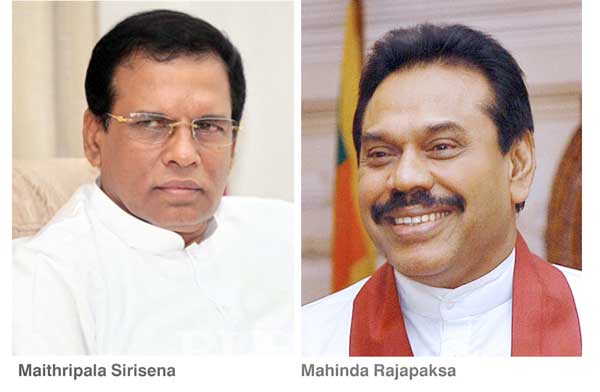
The forces that have been mobilized against the incumbent president have rightly raised the problem of democracy as a central concern facing the nation today. Democracy signifies different things for various individuals, for different social groups. Nevertheless, practically all the oppositional forces, except Jathika Hela Urumaya (JHU) had come to a consensus that in order to reestablish democracy in Sri Lanka a single of the vital prerequisite is the abolition of the executive presidential technique. It was explicitly states what is needed is to abolish it and replace it with a different program. There was a debate on the option method but the majority of the opposition wanted to go back to the Parliamentary method. Will the democratic aspirations of the men and women fulfil after the presidential election? Let us evaluation the election manifestos of the candidates. At the moment, I have three manifestos with me. I will focus 1st on the Manifestos of Candidate Mahinda Rajapaksa (MR) and candidate Maithripala Sirisena (MS). It is not uncommon to have some degree of rhetoric in election manifesto. Figure 1 summarizes proposals in two manifestos on the situation on constitutional alter. ( Click right here to read MS manifesto and here to MR manifesto)
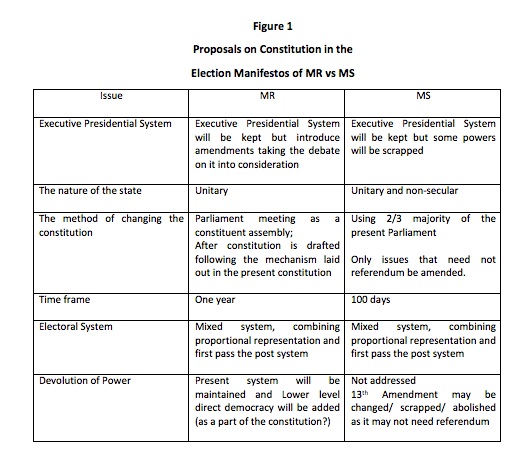 It is exciting to note there is no fundamental difference amongst two candidates as far as the constitutional change/ amendment is concerned. Even though MR leaves the adjustments for the proposed constituent assembly only submitting his ideas on certain troubles, MS has offered detailed list of alterations he is arranging to make within 100 days hence leaving present constitutional architecture intact.
Hence, my conclusion is that with regard to the problems that have been raised by a variety of democratic fora in order to enhance democratic governance in the nation have been either marginalized or neglected in the two manifestoes. Considering that its inception, particularly given that the late 1980s, folks in this country voted for the abolition of the executive presidential system. Constitutional drafts and proposals submitted by citizens’ initiatives reflected this aspiration of the individuals. Nevertheless, the people who began to taste and take pleasure in the energy of the EP refused to adjust it. Ironically, Candidate MS has refused to adjust it following generating a guarantee to that respect even before tasting and enjoying it. In such a circumstance, can we count on democratic governance right after January 8?
The existing democracy discourse in Sri Lanka is marred by a quite narrow definition of democracy. This definition that was advanced for the specific needs of neo-liberalism following in the context of developing nations the Augmented Washington Consensus focuses principally on issues like governance, rule of law, non-interventionist state. Freedom of established media and so on. In other words, the basic objective of democracy is lowered to the operational needs of neo-liberalist phase of capitalism. It would be fascinating to evaluate the definition of democracy adopted right now with that of pre-1994 period. Before 1994 election, democracy included as an inseparable element the power-sharing arrangement although what it meant was not explicitly stated. At least it meant going beyond the 13th Amendment. It also included supplying a ‘human face’ to capitalism. Above all, the abolition of the executive presidential program as an intimate element of comprehensive constitutional redesign was integrated as a pre-requisite of the reestablishment of democracy. This clearly shows the degradation of democratic discourse in the final 20 years. What does it imply? Jairus Banaji, an Indian Marxist, when informed us about 3 meanings of democracy.
1. Democracy in the sense of the formal framework of a constitutional democracy with the rights to freedom and equality, the correct to life and individual liberty, to freedom of religion etc that it guarantees.
two. Democracy as a culture of resistance grounded in the constitutional rights offered beneath my 1st meaning.
three. Democracy as an aspiration for manage. One can see the Communist Manifesto as a generalization of democracy in this third sense (of the mass of workers aspiring to handle their own lives, economically, politically and culturally) and as a culmination of democracy in each the prior senses. As a result for communists (in Marx’s sense) the mass element in democracy is crucial, it is what defines democracy in its most complete sense and historical form.
In the last twenty years we witnessed two types of democratic struggles. Democratic struggled initiated and led by numerous ‘citizen’ democratic groups operated inside economico-legal structure of neoliberalism with the primary objective of achieving these formal democratic rights. These struggles fell beneath the rubric of very first meaning cited above. And numerous of these movements are fundamentally urban and elitist. In restricted sense, some of them went beyond the first which means falling at the boundary of the second meaning.
The second sort of democratic struggles were not even depicted democratic struggles as they had questioned the standard economico-legal structure of neoliberalism. Here, I include, Tamil struggle for autonomy, the Free Trade Zone struggles against proposed pension bill to integrate EPF into accumulation method, struggles against forceful eviction of urban folks, protests by rural masses on numerous issues connected to their day to day living and the student struggles against commodification of education. In these struggles, even in restricted sense, peoples’ aspiration for control was expressed. It is also exciting note that these struggles were led by subaltern layers of the Sri Lankan society.
Two main candidates have failed in their manifestos to address even essential concerns raised by elitist citizen groups. As indicated in the Figure 1 above, both have refused to touch the unitary character of the Constitution. Although MR have said that he would recommend to the proposed constitution assembly to maintain the unitary character of the state, MS have informed he would not TOUCH the unitary and non-secular nature of the present constitution. Therefore ensuring majoritarian rule over numerically tiny nations would stay unchanged.
It was in this back drop, Janatha Vimukthi Peramuna (JVP) has also refused to present an option. It has taken an opportunist position to show that it has not yet broken from its coalition politics that began in 2004. Similarly Tamil National Alliance (TNA) has been silent on the principal democratic demands of autonomy. The same can be described on the Sri Lanka Muslim Congress (SLMC). All three parties have clearly capitulated to parliamentarism claiming that only two alternatives are open. The ideal selection opened for TNA and SLMC in my view is to field candidates on the basis of their key demands or to type a front with other subaltern forces on a minimum widespread plan. In the absence of those 3 forces, the only light at the end of the tunnel is the manifesto of the Left Front that comprehensively address the problems of democracy in its all 3 meanings. The Left Front led by 34 year old former student leader with consistent track record, Duminda Nagamuwa, proposes a setting up of a constituent assembly comprising not just Parliamentarians but the representatives of trade unions, peasant organizations and many other peoples’ organizations. He guarantees autonomy for numerically small nations and guarantees what has been currently provided for then will not be allowed to take back. A robust and vibrant social movement of subalterns dealing with all three meanings of democracy cited above is crucial if the Sri Lankan need democracy following January 9 whatever the outcome of the election.
*The writer is the co-coordinator of the Marx School. e-mail: [email protected]
By Latheef Farook –

Latheef Farook
The opposition presidential candidate Maithripala Sirisena pledges straightforward life, Ven Sobitha Thero calls for social justice and Ven Athuraliya Thero struggles for excellent governance and accountability
Maithripala Sirisena says” on elected as the president he would not move into official residence Temple Trees but would reside in his own straightforward home. He has also declared his assets for every person to see. He is keen on major a straightforward life and serving the individuals of all communities.
As a result he calls for simplicity of life.
Venerable Maduluwawe Sobitha Thero who single handedly spearheaded the campaign to abolish the Executive Presidency with his National Movement for Social Justice wanted to ensure social justice for all in the country. He played a important part in the creation of a widespread opposition candidate. He should be paid tribute simply because he fought for justice at a time not a lot of in the nation were even ready to speak about justice due to fear of revenge.
Therefore he calls for social justice.
Ven. Athuraliye Rathana Thero, a Buddhist monk, a vibrant politician and a dynamic member of the Parliament, formed an organization named ‘Pivithuru Hetak’ (The National Council for a Much better Tomorrow) to adjust the current presidential method by educating political leaders, intellectuals, academics and the public on essential information important on very good governance for the betterment of the nation.
Hence he calls for accountability and good governance.
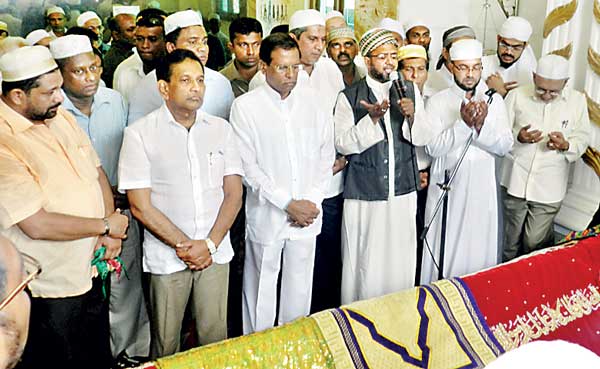 Simple life, social justice and very good governance to the benefit of all are all what Islam is about.This is what Allah told us in the Holy Quran to make sure a much better society far more than 14 centuries ago. This is what our beloved Prophet Muhammad (Peace be Upon Him) has shown us by living a life reflecting the Holy Quranic teachings. In reality he was the personification of all what was taught in the Holy Quran.
In truth fantastic Caliph Omar who constructed an empire stretching from North India to Mediterranean capturing which includes Jerusalem without shedding a drop of blood and ruled with justice was identified for his simplicity and just rule.
For example Caliph Umar, busy doing some official function in the light of an oil lamp, place off his lamp when a visitor who came to see him stated he had just come to pay a social call. There was darkness everywhere. When the visitor asked why he place off the oil lamp Caliph said “I was performing workplace work and the burning oil in the lamp is the property of the folks and he was not entitled to use that oil to entertain a friend”.
In this regard it is worth recalling how Caliph Omar captured Jerusalem with his simplicity.
When the Muslim army entered Jerusalem the Patriarch of the city Sophronius stated that he would negotiate only with Caliph Umar and that nobody enters Jerusalem prior to Caliph Umar. On hearing this Caliph Umar informed that he was on his way.
Accompanied by a servant, Caliph Umar rode on camelback to Jerusalem although he could have been accompanied by an entourage that could have made the ground tremble beneath the hooves of horses. He did so to show simplicity and ensure that Allah alone deserves all the glories.
On reaching Jerusalem, it was the servant’s turn to ride the camel and as a mark of respect to Caliph Umar and to make sure that the individuals see the Caliph, the servant wanted the Caliph to ride the camel. Nonetheless Caliph Umar refused and entered Jerusalem on foot whilst the servant rode the camel to the shock and surprise of every person such as Patriarch Sophronius. On reaching the place Caliph Umar continued the journey on foot carrying his shoes in hand below the astonished gaze of the folks.
Caliph Umar walked to the army wearing modest threadbare clothes. The Christians who watched almost everything from the walls of Jerusalem were amazed at the strange simplicity, unable to believe that this straightforward man could be the leader of these properly equipped armies.
The Patriarch Sophronius who saw the unfolding scenes with excellent admiration stated to his folks that no one in the planet would be capable to stand up to these men and women and advised them to surrender to be saved.
Soon after the treaty was signed the essential to the city was formally handed over in 637 AC. The gates of Jerusalem had been opened and Caliph Umar entered along a promenade that led him to the Church of the Holy Sepulcher. Caliph Umar was inside and the Patriarch Sophronius said to him “pray”. However Caliph Umar declined, fearing it may well establish a precedent that would threaten the church’s continued use as a Christian home of worship. Alternatively he prayed in an location to the south of the church, now the site of the Mosque of Umar in Jerusalem.
In performing so Caliph Umar showed the world the meaning of tolerance and generosity in victory and strength. It was the greatness of Islam that shone in his spirit and was reflected in his ethics though he was a particular person known for his firmness and courage.
United States President Barack Obama, British Prime Minister David Cameroon, Israeli Prime Minister Benjamin Netanyahu and Indian Prime Minister Narendra Modi, all soaked in innocent Muslim blood, need to have to understand a lot from Caliph Umar on good governance.
With regard to Ven Sobitha Thero’s get in touch with for social justice , in the Holy Quran- in Chapter Al-NISA (Women) Allah says
“Believers, be upholders of justice and bearers of witness to truth for the sake of Allah, even even though it may either be against yourselves or against your parents and kinsmen, or the wealthy or the poor, for Allah is far more concerned with their well-getting than you are. Do not, then, comply with your own desires lest you maintain away from justice. If you twist or turn away from (the truth), know that Allah is nicely aware of all that you do. (from Sayyid Abul A’la Maudi’s Towards Understanding the Quran. Vol 11 Surahs four-6)
Ven Sobitha Thero and a lot of other individuals involved in the presidential campaign call for constitutional adjustments which assure accountability.
Islam advocates accountability “Abdullah reported that Allah’s Messenger (pbuh) stated: Every single one particular of you is a guardian and accountable for his charge. Thus the Amir (Ruler or Head of State) is a guardian of the folks and He is accountable for them. And a man is a guardian of his household and he is accountable for them and a females is in charge of the household and her young children and she is accountable for them and a servant is guardian of his master’s house, absolutely everyone of you is accountable for his subjects” (Bukhari, al-Jam’al-Sahih)
Accountability for Islamic leaders goes beyond the confines of this life they will also be accountable to Allah in the Hereafter. Here are two relevant sayings from the Prophet Muhammad (Pbuh) about the consequences to Islamic leaders who are corrupt, and self-serving:
“Verily, Allah commands you to make more than the trusts to these entitled to them. And that when you judge amongst them, you judge with justice.” (four:58)
Islam is also in total agreement with Ven. Athuraliye Rathana Thero’s call for a corrupt free of charge society below very good governance to the benefit of all. In reality this is what Holy Quran has been teaching for the past more than 14 centuries. This was the just rule in Madina for the duration of the time of Prophet Muhammad and beneath righteous caliphs. Regrettably western imperil powers distort Islam and demonize Muslims to invade and destroy Muslim countries and Muslim societies to loot their wealth and guarantee that Islam remains suppressed to suit their evil designs. Thus the planet is unable to comprehend Islam. Sri Lanka is no exception.
The Quran states: “And by the Mercy of Allah, you dealt with them gently. And had you been extreme and harsh-hearted, they would have broken away from about you so pass more than (their faults), and ask (Allah’s) Forgiveness for them and seek the advice of them in the affairs. Then when you have taken a choice, put your trust in Allah, undoubtedly, Allah loves those who place their trust (in Him)” (three:159).
Exceptional Islamic leaders are truthful, just and keep away from bribery and corruption.
“And do not devour your wealth amongst yourselves by means of falsehood, and provide it not as a bribe to the authorities that you may possibly knowingly devour a portion of the wealth of other individuals with injustice.” (two:189).
Ibn Masud said that Allah’s Messenger (Pbuh) slept on a reed mat and got up with the mark of it on his physique. He stated, “O Allah’s Messenger! I wish you would order us to spread one thing out for you and make anything.” The Prophet replied, “What have I to do with the planet, I am like a rider who rests for a although below the shade of a tree, then goes off and leaves it.” Ubaid-Allah bin Muhsin reported Allah’s Messenger (Pbuh) as saying, “If any person among you is secure in thoughts in the morning, healthful in physique and has meals for the day, it is as even though the complete world has been brought into his Possession.”
Abu Hurairah reported Allah’s Messenger (Pbuh) as saying, “Look at these who are inferior to you and do not appear at these who are superior to you, for that is far more most likely to hold you from despising Allah’s Favor on you.” Abu Talha said, “When we complained to Allah’s Messenger of hunger and raised our clothes to show we have been every single carrying a stone over our belly, he raised his garments and showed that he had two stones on his belly.”
Once Umar entered Prophet’s house and noticed the state of the furniture in it. Prophet himself had only 1 sheet of cloth round him to cover the decrease element of his physique. There was a single basic bed, with a single pillow filled with nut fiber on one particular side of the room was some barley and in a single corner near his feet was an animal skin. There were some water-bag skins hanging beside his bed. Umar mentioned that on seeing these tears came into his eyes. Allah’s Messenger asked the cause for his tears. He replied, “O Allah’s Messenger! Why shouldn’t I cry! The strings of the bed have left marks on your body. This is a tiny room with all your furnishings I can see what there is. The Kaiser (Cesar) of Rome and Kisra (Khosru) of Persia get pleasure from luxurious living while you, Allah’s Messenger and the Selected One particular, reside like this.” He mentioned, “Ibn Al-Khattab! Don’t you like that they decide on this planet and we choose the Hereafter?”.
In brief, Muhammad (Pbuh) lived and liked a straightforward life and enjoyed every minute of it. He taught his companions, via his private instance, to lead a straightforward life and not to be ostentatious.
Where are we following 14 centuries nowadays?
It is worthy to note that Islam and great Islamic rulers like Caliph Umar have disappeared from the Muslim Middle East which was turned into a killing field by United States, Europe and Israel in collaboration with the Arab dictators. All what we have is a group of treacherous anti individuals anti Islamic dictators serving their US-European masters who have installed and maintained them in energy to implement their evil agendas against Muslims.
This contains the land of Islam Saudi Arabia exactly where the ruthless dictator, the most oppressive ruler in the planet, brutalizing folks in comprehensive violation of Islam. Hence a single must not judge the present set of dictators in the Middle East by Islamic values.
JHU General Secretary and a front-liner of the frequent Opposition movement, Patali Champika Ranawaka nowadays challenged the Rajapaksa regime to clarify the crimes that are being probed and punishments that would be meted out on these found guilty of war crimes by the Presidential Commission on Disappearances.
Champika
Speaking at a media briefing held in Colombo this afternoon, Ranawaka said President Rajapaksa ought to first clarify the specific charges that are becoming probed by the Commission and the punishments for the perpetrators
“Our stand onthe subject is that if there are charges against any military personnel, it need to be probed and action against them should be taken inside the legal framework obtainable domestically. There have been several situations in Sri Lanka where such action has been taken against military personnel when found guilty,” he mentioned while adding that the government has no appropriate to speak on war crimes because it has already mandated the Disappearance Commission to investigate into it.
He went on to point out that by inviting international authorities to guidance the Commission if and when required, has also resulted in an international intervention.
“We don’t agree with international interventions into this matter. We strongly think it has to be carried out domestically,” he added.
Speaking further he also blamed President Rajapaksa, External Affairs Minister and Coordinating MP for the External Affairs Ministry for the present deterioration of Sri Lanka’s foreign relations.
“In 2009 Sri Lanka had secured a 2/3 majority inside the Human Rights Council but this circumstance was totally turned about within a handful of months by the negligence of officials,” he stated.
He also commented on the allegations that have been produced by former Basic Secretary of the UNP, Tissa Attanayake on a secret deal made by the typical Opposition to decrease troops in the North.
“We learn that an attempt is becoming made to prevent the voters in the Northern province from casting their votes. This is a fine example of the true nature of the relations among the government and the LTTE. . . So I urge the Northern province residents to make use of their right to vote,” he added.
Video Rating: five / 5

By W.A. Wijewardena –
Dr. W.A. Wijewardena
A drastic reduction in crude oil rates
Crude oil rates in the planet marketplace have tumbled and they are nevertheless tumbling. The average price of the West Texas Intermediate category of crude oil stood at a level of $ 100 per barrel, which is equal to 159 litres a handful of months ago. It has now fallen to a level of $ 60 per barrel final week. This is practically a decline of 40% in an important commodity within a couple of months.
Supply has grown quicker than demand causing prices to fall.
The price of any commodity falls mainly due to that commodity getting an excess provide. An excess supply can occur due to a fall in demand or an boost in provide or both. In the present predicament, when the Northern Hemisphere of the globe goes into winter, the demand for oil merchandise usually rises simply because of the require for heating. Hence, if there is an excess supply this winter, it is primarily due to the supply of crude oil increasing faster than the improve in demand.
Two theories have been raised to explain the present excess supply of crude oil in the marketplace. One is financial and the other is political.
The US going into tapping shale oil sources
The economic motives are significantly less unknown in this part of the world. That is, the United States has, in a massive way, explored oil in new oilfields recognized as ‘shale oil’ fields by utilizing a new technology referred to as ‘fracking’ which is the shortened kind of what is ordinarily referred to as ‘fracturing’.
Oil shale refers to a rock situated about 4-5 km beneath the surface of the earth containing solid bituminous components referred to as kerogen that are released as petroleum-like liquids by heating the rocks (accessible right here) The shale oil is in strong form and for that reason can’t be pumped to the ground like the oil that is extracted from conventional oil fields. Hence, even although the availability of oil in shale rocks was known for centuries, the industrial exploitation of shale oil did not take spot until the early component of the second decade of the new millennium.
Even as late as 2011, the US Bureau of Land Management had concluded that “there are no economically-viable ways but identified to extract and process shale oil for commercial purposes.”
The fracking technology to bring shale oil up
But this was not to be for extended. A new technique of tapping the vast deposits of oil and gas contained in shale rocks was employed on a industrial basis in the US right after about 2012. That was called hydraulic fracturing or merely ‘fracking’.
With this approach, what is becoming done is that a vertical hole is drilled up to the formation of shale rocks, which are located about four km beneath the ground level. This vertical drill is continued horizontally via the shale rock related to the ‘donas’ which a single finds in gem pits in Ratnapura. Then, about 4 million litres of water mixed with sand and chemical compounds are injected at higher stress to the horizontal section of the drill causing the shale rock to fracture and crack open, similar to the fracturing which could happen in a bone of the physique when it is subjected to a heavy blow.
The fissures developed by the fracturing are kept open by the sand that is released along with the water mixture. It causes the shale rock to release the gas and oil which had been contained within it for a lot of millions of years. The oil and gas mixed with water are then pumped back to the ground, separated and employed for further processing. The recovered water is initial stored in open pits and then removed to treatment plants.
The fracking revolution
Fracking has revolutionised oil and gas exploration in the world. This was hitherto a commercially untapped resource and now it is getting tapped on a huge scale, especially in the northern portion of the United States.
Its sudden proliferation has helped the United States to increase production of each these energy things. By 2014, the US became self-adequate in natural gas and in the case of oil, emerged as the world’s biggest producer of crude oil, driving Saudi Arabia down to second spot.
It is estimated that by 2020 the US will grow to be self-enough in crude oil as effectively. This was excellent news for Obama administration which had been beleaguered by all for a lack of visible financial recovery in the country. Hence, despite the protests against fracking on environmental grounds, the Obama administration is openly supporting the new oil exploration venture which US companies have undertaken.
The world’s fracking mania
Shale oil is not confined only to the US. It is abundantly accessible in the southern provinces of Canada, Lithuania, China and New Zealand. Soon after it was proved that fracking technology was a industrial good results, all these countries have now started plans to exploit their shale oil resources. The enhanced oil and gas production in the US has decreased its imports making a glut in the present power marketplace, sending prices down.
Planned future shale oil exploration by other nations will hold the market place glut going for numerous a lot more years. The present surplus as effectively as the anticipated surplus has sent oil costs tumbling in the globe industry. That is the economic cause for the present decline in oil prices.
A conspiracy theory to clarify falling oil rates
The political cause is connected with a well-liked ‘conspiracy theory’. The present glut has been augmented by Saudi Arabia’s refusal to reduce oil production to match the decreased import demand to sustain oil prices at its historical typical of $ one hundred a barrel.
The Saudis have rationalised that even if oil prices have come down to $ 40 a barrel, they would nevertheless not take into account cutting oil production. The present low oil costs are a loss to Saudis and other members of the Organisation for Petroleum Exporting Countries, popularly recognized as OPEC. But if costs further tumble to a $ 40 level, their losses would be augmented beyond recovery.
In this background, what has prompted the Saudis to stubbornly refuse to reduce oil production? The conspiracy theory has been harboured to justify this irrational behaviour.
Bringing Russia to its knees
It has been argued that the Saudis want to punish 3 parties by permitting oil costs to fall in the market place. First, it is to punish Russia which is supporting the Assad regime in Syria which the Saudis want to topple. Russia is heavily dependent on its oil sources for financing the price range and earning foreign exchange. About a half of its budgetary revenue and about 60% of its export earnings come from the oil sector. When these earnings dwindle on best of the present financial sanctions against Russia by the US and the EU on account of its expansionary policy toward Ukraine, Russia is anticipated to fall to its knees, completely appreciating the emerging stark economic realities.
Currently Russia has been punished by these two counts: its currency, the rouble, has fallen in the marketplace from about 30 roubles a dollar to 70 roubles a dollar. The Russian Central Bank is desperately trying to maintain the rouble from further falling by releasing some of the dollar reserves it is holding and escalating interest rates to an unprecedentedly high level of 17% per annum. Each these measures are anticipated to punish Russia in the long run by shrinking its economy.
Punishing Iran for getting nuclear ambitions
The second celebration which it is claimed that the Saudis want to punish is the unfriendly regime in Iran. Iran’s nuclear ambitions have been deemed by the Saudis as a threat to their existence. Since it is unlikely that Western sanctions against Iran could force the regime to abandon its nuclear ambitions, it is said that the Saudis want to make their own attempt. That is, by forcing oil prices to fall in the market place and sustaining them at those low levels for sometime the Saudis want to provide a fatal blow to that nation.
Damn the US shale producers
The third party to be punished, according to this conspiracy theory, are the shale oil makers in the US. Tapping shale oil resources is a costly affair and if oil prices fall beneath $ 80 per barrel, offered the current expense structure, the boom in the shale oil sector in the US will come to a sudden finish. Thus, it is alleged that the Saudis want to get rid of a single of their rivals who has resorted to option oil exploration.
Can the Saudis be on a self-destructive path?
This conspiracy theory is rationalised by pointing to the low expense of the production of crude oil in Saudi Arabia. Because Saudi oil is found pretty close to the surface level, it is blessed with the lowest expense among all the oil producers in the planet.
Its charges range in between $ 15 and $ 25 per barrel whereas in all other nations they are above 50 per barrel. So, the Saudis can still survive even at a price tag of $ 40 per barrel whereas all other producers, including the US’s shale oil producers, will vanish from the industry at that value level.
It is economics and not conspiracies which rules markets
Several believe in this conspiracy theory due to the fact it is exciting and attractive to the well-liked sentiments of people. It is the big and potent guys who are to be punished and not the poor nations in the world. Hence, a conspiracy theory which suggests that the US is going to be punished has considerably a lot more appeal than any other conspiracy theory.
But if this conspiracy theory is true, then, the Saudis are on a self-destruction path. Saudi Arabia depends principally on its oil sector for wealth, export earnings and prosperity. If oil prices are at a low level for a considerable period of time, it is Saudi Arabia which is to endure more than these countries which it desires to punish. Additional, though the Saudis can withstand and survive through a cost reduction, all other members of OPEC can’t do so due to the higher price of oil production by them. A lot of such producers, especially Venezuela and Nigeria, have to close shop if they are hit by such an external oil value shock.
It is as a result unlikely that any rational selection-maker would go for such a self-destructive choice. Hence, it is more probably that these punishments are basically a natural consequence of the present global oversupply in oil rather than deliberate action taken by 1 of the major oil producers.
Market’s reaction to low oil rates
Hence, the all-natural industry forces will do a series of market adjustments to right the present fall in oil rates. Pressure would be exerted on Saudi Arabia to cut output and thereby bring oil prices up once more. Investors in shale oil in the US, obtaining that their oil wells are no far more economical, will voluntarily restrict oil production thereby permitting oil imports to the US as soon as once again.
These nations which are blessed with shale oil deposits will postpone their plans to tap this resource thereby taking out the anticipated market place provide of crude oil due to new shale oil exploration. Accordingly, marketplace costs will start moving up once once again and get stabilised at around $ 80 to $ 90 per barrel. That cost is an economic value for all other oil producers in the globe.
Low oil rates are an inhibiter to Sri Lanka’s Mannar Basis ambitions
Sri Lanka’s existing oil consumption stands at about 1 billion litres of petrol and two billion litres of diesel per annum. It would have gained a substantial advantage due to the low oil rates had it not enhanced its vehicle imports in a massive measure in the current past via a supporting duty reduction.
Vehicle registrations are increasing at a rate demanding a lot more oil and diesel imports. Accordingly, though the price is low, the volume will improve, decreasing the total advantage which the nation would have gotten out of the decline in oil rates in the planet market.
Sri Lanka’s nascent oil exploration efforts in the Mannar Basin will also suffer if oil rates are at a level of $ 80 or beneath. These offshore oil explorations are such a pricey affair, even North Sea oil producers cannot survive unless oil rates have risen to a level of $ 90 and above.
If the prices are reduced than this threshold value, the Mannar Basin oil could be pumped up only with a supporting subsidy by the Government. Hence, it will be a lot more economical for Sri Lanka to hold the oil under the sea level in the Mannar Basin alternatively of taking it out.
The current value fall is a temporary phenomenon
Consequently according to economic logic, the present tumble of oil rates in the globe markets is going to be a short-term phenomenon. They will stay at these low levels only for another six to eight months. Soon after that, prices will settle when again at a level of about $ 80- $ 90 a barrel.
*W.A Wijewardena, a former Deputy Governor of the Central Bank of Sri Lanka, can be reached at [email protected]
By Rajiva Wijesinha –

Prof. Rajiva Wijesinha MP
Enemies of the President’s Guarantee: Dopey 3
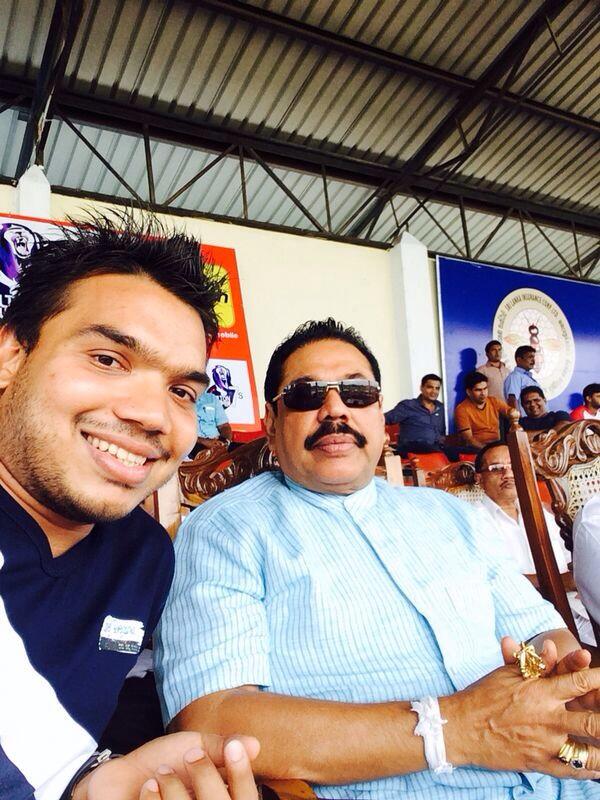
Namal in fact had no inhibitions about discussing with buddies the profitable enterprise bargains he was involved in. But it is attainable that he did not think there was anything incorrect with all these. More than the years a culture of close involvement of politicians with the enterprise sector had created, and the favours received from them had been observed merely as tokens of friendship – as were the concessions and contracts the complaisant businessmen received. So Chandrika Kumaratunga benefited as President from the largesse of a businessman known as Ronnie Pieris, who did extremely well beneath the regime, although one more close pal who had worked for Emirates ended up, when he was appointed head of Air Lanka, as it employed to be identified, by subordinating it to that airline. Emirates emerged strengthened immeasurably by the partnership while Air Lanka lost a lot of the reputation and the attain it had earlier enjoyed. But these seemed isolated examples, and the connections to any incentives had been never direct.
But by the time the Rajapaksa regime was settled in, the potential for company had expanded immeasurably, and Namal, with initially a lower profile than these holding executive positions, but with certainly the greatest influence of all, was soon swiftly befriended by several regional and foreign businessmen. But as with the Packer deal, he could doubtless convince himself that he was advertising far more financial activity in Sri Lanka, and that the nation would also advantage.
 One more region in which his friends had a field day was the Stock Exchange, which it quickly became identified was being ruthlessly manipulated. The President’s vital innocence about this sort of thing seemed apparent when he appointed as its Chairman Indrani Sugathadasa, a former senior public servant of wonderful integrity, who was also the wife of his Secretary Lalith Weeratunge. But just before lengthy she felt obliged to resign, and the President accepted her resignation. She had asked her husband just before she resigned regardless of whether it would impact his position, and he had reassured her because he did not consider he could contribute to the vitiation of her integrity. But, offered that it was rumoured that Namal had played a function, on behalf of his buddies, in generating her position untenable, the matter obviously impacted his personal feelings and his possible effectiveness.
Mrs Sugathadasa was replaced by an additional figure of known integrity, a former Member of Parliament, Tilak Karunaratne. He was also concerned about education, and was a member of an advisory group I had set up named Religion, Education And Pluralism. After he was appointed, he recommended that we meet in the Security Exchanges Commission office, since that would save him the extended journey to my Reconciliation Office which was near Parliament. I asked him then how confident he felt about his position, and the clearing up he thought was vital, and he told me that the President had assured him of a totally free hand to restore self-confidence. But inside a handful of months he too resigned.
His successor was deemed far more prepared to oblige those in power, but even he, shortly following his appointment, was rumoured to have attributed a shaky transaction to the Secretary of Defence. The matter was hushed up, but it was a sad decline for Gotabaya Rajapaksa, whose reputation for economic integrity had earlier been above reproach. The association with Duminda Silva had dealt it a blow, but now it seemed that he also had systemic involvements with big company. This seemed additional established with the incident at Weliweriya, where it was claimed that the forces had been referred to as out at the behest of the Chairman of a organization which was under criticism for polluting the water provide.
Ironically, there was no evidence that the firm had deviated from safety requirements, and Gotabaya’s view that the protests had been orchestrated was almost certainly appropriate. Entertainingly, if tragically from the viewpoint of the bereaved, the protests against the business had been promoted by Mervyn Silva, who was believed to be close to Basil as a major politician of the Gampaha District where Basil had headed the poll for the government. But the initial qualms of the individuals about the water provide had not been addressed, even though misleading details about the PH aspect of the water in the area had contributed to anxieties which burst out in fervent protests. The selection then to deploy the army may possibly have been made in the belief that, if protracted and violent, the factory would be damaged – but the upshot was that the factory had to move, given the resentment the deaths roused. That this was largely due to internal rivalries was symptomatic of how far the government of President Rajapaksa had moved from its initial unity. And the absence of any systems to appear swiftly into public grievances created it clear that no one particular was interested in advertising the grass roots level consultations, with prompt redress for issues, that had been a cornerstone of the Rajapaksa manifesto.
Though the President must in the finish take responsibility for the failure to live up to his ideals, the truth is that he was now operating in a planet really distinct from the easy understanding of politics that he had evinced in his own profession, and which he had inherited from his father and his uncle ahead of him. Mahinda Rajapaksa was the initial elected leader of Sri Lanka who did not come from the Western Province, and his commitment as a result to rural improvement was special (although it should also be granted that President Premadasa before him, from the Western Province but a comparatively deprived background, also understood and worked on the want for equitable development). But he left the bulk of activity in this regard to Basil, who concentrated on cement rather than people. Gotabaya, although devoted to his soldiery, often thought safety required repression of men and women who evinced hostility, even of the mildest sort. And Namal, who ought to have been most concerned with the Rajapaksa legacy, was emphatically a child of Colombo, devoted to the concerns of the rich with whom his closest associations have been.
Mahinda Rajapaksa had perhaps been lucky in that his mentor had not been capable to gain him admission to S. Thomas’ when he moved to Colombo. He had been told by the then Warden of the College that it was too late to bring the boy into conformity with the culture there. But Namal’s admission to that elite establishment was facilitated in the nineties and, although he did not shine in school, and was certainly deemed a straightforward but decent youngster, he absorbed a culture which was by then orientated towards the consumerism of the West. The magnificient collection of watches that Namal possessed, brand names in designs and colours to match whatever else he might be wearing, was probably the most critical symbol of what his education had given him
But what was far more critical than such tastes was his potential to finance such tastes. My personal understanding of how the young man operated created when I was told by Arjuna Ranatunga, former Sri Lankan Cricket Captain, how Namal had sought to profit by investment in cricket. Arjuna had been an SLFP Member of Parliament, but he had left the celebration in 2010 to help Sarath Fonseka, so it is feasible that his story was coloured by his political position. But he had generally had a reputation for integrity as well as strength of character, and I had found him a committed colleague at the Committee on Public Enterprises, exactly where he had also evinced a powerful social commitment.
He had been particularly scathing in the examination of Sri Lanka Cricket, exactly where his brother had been the Chief Executive whilst also operating for the Carlton Sports Network. His questioning made it clear that the award to that Network of telecasting rights for cricket matches, a especially profitable contract, had been irregular. But Arjuna also noted that the losses Sri Lanka Cricket was creating was because of huge expenditure to develop up stadiums for the Globe Cup in which we had been co-hosts. His point was that this was unnecessary, since when he had been in charge of Sri Lanka Cricket he had reached an agreement with the World Physique that the facilities we had did not call for enormous upgrading for the purposes for which they would be used.
Later he told me that the President had wanted him to develop a globe class cricket stadium in Hambantota, his personal District, the list of representatives for which in Parliament was now headed by Namal. Arjuna had told him that such expenditure would be a waste, and that it produced much more sense to create facilities in schools in the area to train up youngsters. The President had seemed annoyed, but he had evidently taken to heart Arjuna’s point that, whilst the nation must not invest on this, he was prepared to function on it if there had been an investor – for Namal named Arjuna up soon afterwards to say he had one particular accessible.
The dilemma was that, when Arjuna had told him it would price about 15 million dollars, Namal had asked him to say it would be 30. Arjuna stuck to his figure when the man was brought to see him, and the man had seemed interested, but stated he wanted to be confident Arjuna remained in charge. But Arjuna stated he could not assure that, provided his political commitments, and the investor lost interest. But the stadium was then constructed, at huge and unnecessary expense as Arjuna described it.
The President doubtless went ahead with the project simply because of his devotion to his residence District. He had already had a harbour built there, which created a lot of sense provided that it lay on properly employed sea routes. Though there have been difficulties connected with a rock that seemed an obstruction, those could doubtless be overcome, and in time the harbour would probably prove a sensible investment.
There was much less optimism about the new airport that had been constructed in the Hambantota District. Even though a second airport was a good idea, its siting left significantly to be preferred, considering that it was far from the coastal areas that it should have serviced if tourism was a priority. And no work had been made to develop the infrastructure in the region and guarantee excellent cause for passenger planes to get in touch with there. So the couple of that had began operating there gave up, and inside a couple of years there had been no typical flights there, except for some Sri Lankan Airlines flights that known as there en route to or from Colombo, an workout that was wasteful of time and income.
When to this was added a stadium in the District, it was clear that sentiment had overcome rationality. But the added difficulty, about the further cost which Namal’s involvement seemed to entail, was possibly not anything for which the President could be held straight accountable. It was clear nonetheless that his excessive indulgence was proving especially tough on the country.
And no matter whether Namal understood the needs of the country, as opposed to his own, seemed in doubt. One particular of the saddest stories about him was that he had not been worried about Sri Lanka losing the vote in Geneva in 2012, because that could be utilized to win votes at elections in Sri Lanka. It is tough to think that he could have been so callous about the forces who would be the victims of the Western try to pin war crimes charges on Sri Lanka, but it was argued that that may well clarify the own goals the Sri Lankan team engaged in, ignoring the approach of our Permanent Representative, Tamara Kunanayakam and her efforts to create up defences internationally. Sadly, inside a couple of years of Mahinda Rajapaksa becoming elected to his second term, choices seemed to be in the hands of those without having the capacity to program or think beyond their own interests.