By Muhammed Fazl –

Muhammed Fazl
“Do not try to demolish a false set of beliefs except soon after developing a appropriate set of beliefs [in the populace] – Imam Hassan Al-Banna
Rapid to distance from, does the 4 letters ‘ISIS’ really spell danger for the Muslims or for them to be apologists and be all defensive just at the mere mention of it? Although I am yet to understand the now-fashionable practice of Muslims getting answerable to or compromising their faith and religious practices to suit misguided adherents of distinct faiths, instead of contributing towards an unjust society of immorality and lawlessness, I think it is time the followers of Islam stood their ground and for the rest of the globe to begin understanding that which was revealed over 14 centuries ago.
Unlike most philosophies and rituals-only beliefs in present times, Islam getting a full supply of guidance and teaching a comprehensive set of laws, small wonder that it has turn out to be the quickest increasing and the most well-known religion in the world. A single could mythicize the sheer quantity as a outcome of ‘conversion by the sword’, but would it be remotely feasible for a religion of peace to be spread by the sword?
History has taught us that non-Muslims living below Islamic rule have been constantly treated with respect. When Muslims ruled Spain for over 800 years, the non-Muslims living there flourished. When India was below Muslim rule for about a thousand years, had it been ruled by the sword, there wouldn’t be 85% non-Muslim population nowadays either. No Muslim army has ever invaded Indonesia (exactly where it now has the biggest Muslim population in the globe) or the Muslim majority Malaysia. Likewise, no Muslim army was ever sent to the East Coast of Africa either.
In reality, the religion of peace spread significantly faster for the duration of periods of peace than for the duration of times of wars. An report which appeared in Reader’s Digest Yearbook of 1986 provides the statistics of the boost of the percentage of the significant religions which indicated the Muslim population escalating by 235% although Christianity improved by 47% throughout a ‘no Islamic conquest’ period between 1934 and 1984. Even although Islam continued to spread when Muslims have been not prevailing economically, socially or politically, it is an irrefutable reality that it was the force of truth, purpose and logic that was accountable for the rise as seen nowadays. Even though there is an indication of particular periods where Muslim rulers have been intolerant of other faiths and its adherents, it was indeed due to a deviation from Islamic principles rather than getting in conformity with the edicts of Holy Quran or the traditions of the Prophet of Islam.
Societal Collapse
Ranked 9th amongst the prime ten countries in the globe for the highest cases of rape, ranked 4th highest for circumstances of suicides, ranked as the 4th largest boozing nation in the globe and the intended casino paradise and that which comes along the side business of prostitution, would this be the trend in retailer for the future generation of this country?
Falsely portrayed as secular to the unsuspecting, successive governments have all played the Sinhala Buddhist card all along to stay in energy, often resulting in devastating consequences specifically for the minorities. Getting learned a tiny late to be secure than sorry, current communal/racist attacks seems to have taught minority communities not to be reliant on the Sinhalese dominated security forces for protection. Deep-rooted racist mentalities of the legislators in the parliament appears to be of no consolation either for the minorities, either due to absence of equal opportunities or due to failures on the component of the state to re-distribute wealth equally.
While the Mahanayakes of the 4 Chapters appears to be dozing off in their luxurious enclaves when the country situation is in tatters, the Catholic high priests seems to be excited only with the arrival of the Pope although paying scant regard to the ploy of President Rajapaksa (MR) who shortened the campaign period of the opposition parties and for employing the Pope’s pay a visit to as an excuse. The ‘pedophiles-shielding’ pseudo men of faith they are, they ought to have postponed the go to being aware of quite effectively the harm that could befall the country if MR is permitted yet another term.
The Tamil National Alliance (TNA) or the Hindu clergy seems to be carrying out no favors to the nation either with their activities restricted to matters concerning only their community and or the Northern Peninsula. The opportunists they are, leadership of the Sri Lanka Muslim Congress (SLMC), All Ceylon Muslim Congress (ACMC) and the ‘Muslim’ members of parliament representing the Rajapaksa government are performing no much better either and it seems they are interested only in private monetary gains and plump positions, hence playing in to the hands of MR by dividing the Muslim neighborhood and their voter base.
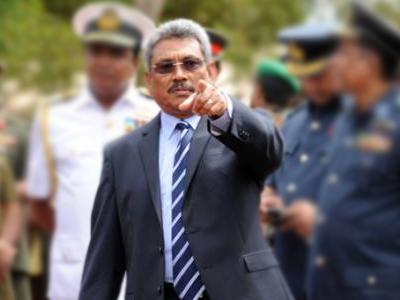
In a nation exactly where its own adherent spend lip service to its teachings or donate only loose alter to their places of worship for its upkeep, I question the wisdom behind governments providing a ‘foremost’ position to Buddhism. Not too long ago Mr. Gotabaya Rajapaksa claimed to have donated 30 million of public cash for producing cosmetic adjustments to a temple belonging to a politically allied monk. That is well and fine. But as a Muslim, my point of contention right here is, WHY Should Muslims contribute towards extravagant tamashas associated with a different religion? If sustaining areas of worship is the responsibility of the state, I think funds ought to be allocated proportionately taking in to account the population percentage of all communities. Believing tax collected by the state should be spent accordingly, would it also be wise to spend corporate and individual taxes understanding nicely that it would be utilized to fund a lavish life style of a corrupt couple of? In this situation and with prevalent marginalization of minorities, would the lower-end segment of the minority communities get their fair share of state advantages as nicely?
When politicians are getting traded often among political parties for selfish gains and or with minimum educational qualifications or integrity, would it also be sensible for the self-respecting type or the victimized to seek fairness or justice from the current system when one’s rights are infringed upon? Corrupt to the core, public money being swindled, the judiciary made insignificant and lawlessness reigning, does it not arise the require for the nation to adopt an option supply of governance?
Serendipity In Serendib
Stressing after once again my belief that Democracy in Sri Lanka has been a failure, and where popularity reigns more than competence and exactly where might is correct, it has turn out to be imperative for rules to be changed because ‘demography’ also appears to have changed. Getting been inspired by the wonderful thinker Seyyed Qutb who after mentioned “It is impossible for life to not have an effect on faith, or for faith to have a separate existence away from life”, I think all Muslims (Moor, Malays, Bohras, Memons) living in Sri Lanka should come below one particular Imam (Caliph to be precise) towards fulfilling their purpose of creation and for establishing social justice inside the community if not in the nation.
Likewise, I think the Buddhist, Hindu and the Christian communities too must come beneath one particular priest or leader, guiding their faithful and making a sense of unity at least inside their communities. Ought to there be a conflict among communities of diverse faiths, there need to be an atmosphere where respected and discovered leaders of respective communities coming with each other and resolving matters in a peaceful and an amicable manner. It is said that all religions teaches us very good items in life and the reality that there is constantly a resolution for every man-produced complication. So why not appoint 1 respected spiritual/religious leader to represent each religious neighborhood?
Representing the Islamic faith and neighborhood in Sri Lanka, I think Muslims ought to be taught, guided and ruled by (exactly where it is feasible) Islamic teachings and laws. Whilst there is no need to have for no alarm bells to ring in the minds of the non-Muslim population, the Islamic technique should be aggressively pursued as the ideal alternative in producing a society with excellent moral values, truthful organization practices and an impartial justice program among other folks. To set the ball rolling, I sincerely hope the following will get the attention of religious leaders in the Muslim community,
1. Family disputes, marital discord etc. to be taken to a local Muslim Qazi (judge) and for it to be resolved based on the teachings of Islam, either voluntarily or when reported by a 3rd party.
two. Vigilante squads to be set up to monitor clothing attire and crackdown on indecent and revealing clothes worn in public by Muslims.
3. If Halal certifications cannot be enforced publicly, all meals merchandise manufactures/importers should give assurances to a Muslim Halal regulatory physique (in private at least) of adhering to Halal requirements and give access to confirm the approach when necessary.
four. Irrespective of what college they attend, private or otherwise, Muslim, Buddhist or Christian, making positive that each and every Muslim girl who attains the age of puberty is permitted to put on clothing in conformance to the teachings of Islam.
5. Monetary disputes to be settled first in the presence of a Muslim Qazi, hence safeguarding the respect of all parties concerned. The present Roman Dutch law method usually takes years for any type of justice to be meted out and it will also be a burden if each and every dispute is to be addressed in the present day over-crowded courts of law.
6. Apart from the regular corporate/personal taxes paid to the government, all Zakath money (obligatory annual charity tax of two.five% of all earnings/assets) to be pooled in to 1 fund and distributed to a list of deserving poor recipients. Even though each and every donor can nominate names of recipients, the Zakath Committee need to have the final say in the redistribution of wealth.
7. Law enforcement units or civil defense forces within the community to be created in every single town in partnership with the state law-enforcement authorities. Even though this might minimize the burden on the country’s Police Department, in the event of clashes, the Muslim neighborhood will be in a much better position to keep peace and since they are typically the ‘lamb to the slaughter’.
8. To establish enforcement teams to assure that each youngster receives education up to a secondary level and that no kid from no neighborhood is employed in any sector if they are below the age of 16.
9. Religious education ought to be made compulsory for all Muslim children, be it at a secular college or afterwards in a seminary/mosque/institute.
10. Establish a monitoring committee to avert fanaticism or violent radicalism taking roots in the minds of the Muslim youths.
Even though the list is also long to be written here, it must be pointed out that terrorists and criminals are developed and by no means born. Although it is no secret that particular violent Sinhalese Buddhist movements like the Bodu Bala Sena (BBS) have aligned themselves with the regime of President Rajapaksa and is fuelling an inevitable human disaster, as a counter measure, the rise of a violent Islamic movement and in the lines of the ISIS of Babylonia cannot be discounted in the occasion President Rajapaksa is allowed an additional term. On the other hand, the ‘unknown angels’ they are, Mr. Maithripala Sirisena and Mr. Ranil Wickremesinghe seems to have impeccable credentials and honesty in their respective political careers and I think minorities, specially the Muslims and Tamils should reject the ‘known devil (MR) for great.
January 08, 2015, just perhaps the day that determines the nation heralding a prosperous and a just society or the day the nation reverts to an anarchist and a lawless 1. Either case, the get in touch with for the establishment of a borderless Islamic State for the Muslims seems to be louder than ever now, and believing it would be in the best interests of detractors, specially the pseudo ‘Muslim’ politicians to stay out of the way when establishing divine laws of God, the following verse just happened to cross my thoughts,
“Permission [to fight] has been given to those who are becoming fought, simply because they were wronged. And certainly, Allah is competent to give them victory” – 22:39 Al-Quran.
*The writer is an independent social/political activist and can be contacted on [email protected] and through FB (Fazl Muhammed Nizar)
 Even so he has gone some distance to prove that Fonseka entered politics whilst he was in workplace which clearly gives the indication that he most almost certainly using serving officers or the military for the election campaign. Two examples that he has given are the resignation letter of Fonseka as the Chief of Defence Staff (CDS) to the President, and his consultation with the JVP in late 2009 when he was in the US, nevertheless holding the CDS position.
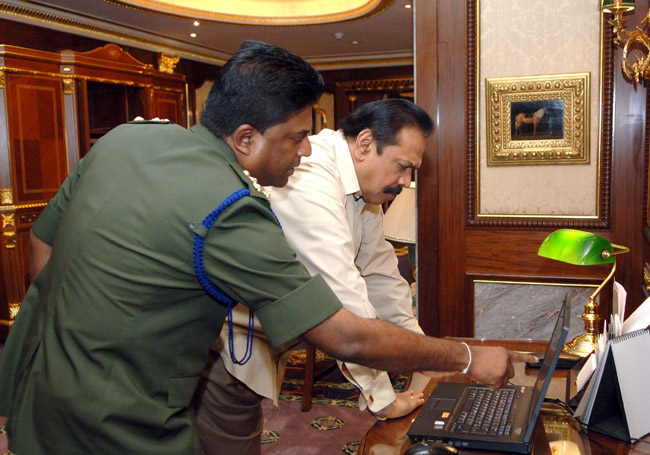 It is our extremely own honorary citizen Sir Arthur C. Clarke who famously stated that any sufficiently advanced technologies is indistinguishable from magic. It is also in the human psyche to attribute things that are inexplicable to a pretty surface level logic, to that identical ‘magic’. Offered these two, it is not rocket science that enabled the esteemed opposition politician to conclude that the election loss, which so defied the logic of what occurred on election day (fairly peaceful if my memory serves me), was due to the magic of technologies.
 In reality, the religion of peace spread significantly faster for the duration of periods of peace than for the duration of times of wars. An report which appeared in Reader’s Digest Yearbook of 1986 provides the statistics of the boost of the percentage of the significant religions which indicated the Muslim population escalating by 235% although Christianity improved by 47% throughout a ‘no Islamic conquest’ period between 1934 and 1984. Even although Islam continued to spread when Muslims have been not prevailing economically, socially or politically, it is an irrefutable reality that it was the force of truth, purpose and logic that was accountable for the rise as seen nowadays. Even though there is an indication of particular periods where Muslim rulers have been intolerant of other faiths and its adherents, it was indeed due to a deviation from Islamic principles rather than getting in conformity with the edicts of Holy Quran or the traditions of the Prophet of Islam.