By Nihal Jayawickrama –
Dr. Nihal Jayawickrama
The Bill for the Nineteenth Amendment to the Constitution has been drafted, published in the Gazette and placed on the Order Paper of Parliament without having any opportunity for public consultation. As soon as a lot more, a government has arrogated to itself the sole energy to draft a constitution, ignoring the reality that the constitution belongs to the complete country and all its inhabitants. It is a social contract amongst the citizens and the state, whereby the folks agree to submit themselves to the energy of the state, and agree to the manner in which that power will be distributed, exercised and limited amongst the institutions of government. A constitution must not be the solution of political bargaining amongst competing political parties nor should it outcome from the application of the celebration whip.
The proposed Nineteenth Amendment to the Constitution appears to have been drafted with care to reflect some of the commitments created in the typical programme of the typical candidate for the presidency which received the overwhelming support of all ethnic and religious groups of this nation. Nonetheless, a reading of the Bill reveals a number of provisions which, if enacted, could impede the governance of this nation, and interfere with the lives of ordinary Sri Lankans as nicely.
Access to Details
The proposed new Post 14A seeks to introduce a new fundamental proper, namely, the proper of access to info, notwithstanding the reality that the proper to seek, obtain and impart information is an element of the “freedom of speech and expression such as publication” which is currently guaranteed in Write-up 14(1)(a) of the Constitution. What is now needed is a substantive law that offers sensible effect to that basic right. Rather, what is being offered is a constitutional provision that reflects a significant misunderstanding of the concept of access to details. Post 14A seeks to grant every single citizen the basic appropriate of access to any information held by “any other person”, “being info that is needed for the physical exercise or protection of that citizen’s rights”. As far as I am aware, there is no legislation in any country in the globe that gives a citizen the right of access to information in the possession of yet another “person”.
The draftsman has apparently borrowed this provision from the 1996 Constitution of South Africa which was drafted in the context of the “secretive and unresponsive culture” that had prevailed beneath the apartheid regime. The draftsman appears to have ignored the truth that when substantive legislation was enacted in that nation, that error was rectified and the term “private bodies” was substituted for “persons”. In the absence of any such implementing legislation in Sri Lanka, will my neighbour now acquire a constitutional proper to intrude into the privacy of my property in search of info (possibly my study material !) that may be valuable to him for the goal of vindicating his rights in a court of law?
Access to info indicates a appropriate of access to information in documentary kind in the possession, custody or handle of departments of government or other public bodies constituted below the law for any public purpose. It is about open government and accountability and the strengthening of democratic processes. It is not about access to info in the possession of private individuals. Nor must the physical exercise of that correct be restricted below an omnibus clause that consists of grounds such as “the protection of overall health or morals” as stated in the Bill. Exempt documents are normally these that might prejudice a pending criminal investigation, info communicated in confidence by the government of a foreign state, trade secrets, but incomplete scientific investigation, and such like.
Presidential Immunity
The proposed new Report 35 continues to give the President with immunity from civil or criminal proceedings. An examination of comparative constitutions, which includes those of France, South Africa and the Republic of Korea, will reveal that such immunity is enjoyed only in monarchical states and not in democratic republics (where absolutely everyone is equal before the law and topic to the equal protection of the law). Even the President of the United States has not been granted any such immunity under the Constitution of that nation, although the Supreme Court has declined to situation judicial directions in respect of his official acts. Under the current and proposed provisions of the Constitution, even a president’s spouse is prohibited from instituting a civil action for divorce or for upkeep!
Acting President
The proposed new Report 37 states that anytime the President is absent from Sri Lanka or is otherwise unable to perform the functions of his office, the Speaker shall act in that office. This is a departure from previous practice in regard to the workplace of the constitutional head of state. Beneath each the 1946 and 1972 Constitutions, provision was produced for the Chief Justice (or the chief judge of the highest court) to assume that office in the course of such a period if no other individual was appointed to act. If the workplace of President is anticipated to be non-political, it would be inappropriate for an elected politician belonging to a political party even to act in that workplace. Additionally, in terms of Article 66 of the Constitution, the seat of a Member of Parliament becomes vacant if he becomes subject to any disqualification specified in Write-up 91, and 1 of these disqualifications is “if he is the President of the Republic” – even for a day!
In 1975, when President Gopallawa was due to leave the Island on an official check out, the then Speaker, Stanley Tillekeratne, staked a claim to be appointed to act. At the request of the Prime Minister, I sought the opinion of the Lawyer Common on this matter. Mr Raja Wanasundera was of the view that the combination of the offices of Speaker and President would be against the whole spirit of the Constitution. He wrote:
Each as the Speaker and as a Member of the National State Assembly, he is part of the legislature which does not straight exercising executive and judicial powers. The workplace of President is one of the most essential offices contemplated by the Constitution. The President is the head of the Executive. Getting regard to the functions and duties reposed in these offices, it appears to me that the nomination of a person who is a Member of Parliament and the Speaker of the National State Assembly, to act in the workplace of President, would have a tendency to damaging the distinctions drawn in section five of the Constitution.
The incompatibility would clearly arise if the particular person concerned is deemed not to vacate the office of Speaker or Member of Parliament, or both, on acting for the President. If, on the other hand, we take the view that the Speaker vacates workplace on acting for the President, then it seems that a new Speaker will also have to be appointed. The provisions of the Constitution appear to indicate that the workplace of Speaker and Deputy Speaker are various, and the Constitution contemplates that both offices should be filled.
The Attorney Basic concluded that getting regard to the incompatibility referred to above, it was not desirable that the Speaker need to be nominated to act in the office of President. Accordingly, Chief Justice Victor Tennekoon assumed the workplace of President, and Mr Justice Samarawickrema was appointed to act in the office of Chief Justice.
The Constitutional Council
The proposed new Chapter VIIA provides for the establishment of a Constitutional Council. Nonetheless, that chapter does not seem to have taken note of the unfortunate expertise of the preceding Constitutional Council. Five persons are required to be appointed on the nomination of both the Prime Minister and the Leader of the Opposition. What would happen if these two opposing politicians are unable to agree on five or lesser number of persons? Similarly, what would happen if the Members of Parliament of other political parties and independent groups are unable to agree on 1 member to be appointed? Certainly, provision ought to be produced for the President to make such appointments on his personal initiative in such situations.
Secretary to a Ministry
In the proposed new Article 52, provision is created for the appointment of a Secretary for every single Ministry who shall “subject to the path and control of his or her Minister” exercise supervision over the departments of government and other institutions in charge of the Minister. In the 1946 Constitution, the Permanent Secretary exercised such supervision “subject to the basic path and manage of his Minister”. In the 1972 Constitution, the word “general” was deleted. “General direction” related to matters of policy only “direction” on the other hand could be case distinct if the Minister was so inclined. Thereby, the Minister, and via him many Members of Parliament and constituents whom he wished to humour or accommodate, became directly involved in the routine administration and selection-generating processes of government departments.
This modify appeared to have considerable assistance at the time amongst the Ministers considering that many of them believed that Permanent Secretaries who had been appointed by the President on the recommendation of the Prime Minister, occasionally with no prior consultation with the Minister to whom the Ministry had been assigned, had been a channel through which the Prime Minister exercised oversight and influence, if not manage, more than those Ministries. That modify stripped the Permanent Secretary of his independence, and transformed that office into that of a political agent who could be necessary to carry out the distinct directions of the Minister even on matters where independent action was desirable. Obtaining served as a Permanent Secretary under the 1946 Constitution and as a Secretary under the 1972 Constitution, I would strongly urge that the independence of that workplace (and thereby of the public service as a complete) be restored by permitting only “general” path.
Dissolution of a Ministry
The proposed new Article 52 also states that the Secretary to a Ministry shall cease to hold office upon the dissolution of the Cabinet of Ministers, which is an event that would ordinarily happen at the conclusion of a basic election. It is precisely at such a time that a Ministry need to continue to function beneath a Permanent Secretary until a new Ministry is developed or a new Minister is appointed. The conclusion of a common election ought to be the time for an orderly transition, and the Permanent Secretary ought to be the link in between the previous and the future.
Dissolution of Parliament
To curtail the energy of the President to dissolve Parliament in the course of the initial 4 years and six months of its 5 year term (except on a resolution passed by not less than two-thirds of the complete number of members – including those not present – voting in its favour) as is sought to be done in proposed new Report 70, is a recipe for anarchy. What would take place in a Parliament in which no single celebration has a clear majority, and each government that is constituted is defeated following a few months, or a budget is repeatedly rejected, and members are unwilling to vote for a dissolution till they have qualified for their pension at the end of the fifth year? Surely the President should have that reserve power to dissolve Parliament and contact a general election to ensure that stability returns to governance.
Head of Government
A lot has been made in particular political circles about the lack of a reference to the “head of government”. There was no reference in either the 1946 or the 1972 Constitutions to a “head of government”. As in both those Constitutions, the President (or Governor-Basic in the 1946 Constitution) is the head of the executive (i.e. the government), whilst the Prime Minister is the head of the Cabinet of Ministers which is charged with the direction and control of the Government of the Republic.
The Problem of the Referendum
The proposed new Report 3 offers for the President of the Republic to be “elected by the People”. A national election of a constitutional head of state is a luxury that Sri Lanka can’t afford. This provision is possibly being retained in the Nineteenth Amendment for worry that any other, much more rational, form of election (such as by Parliament) could require approval at a referendum. It is time that this unreal worry, unleashed by a 2002 judgment of former Chief Justice Sarath Silva, is ultimately laid to rest.
Following the common election of five December 2001 at which the UNP secured a comfy majority in Parliament, President Kumaratunga invited her principal political opponent, Ranil Wickremesinghe, to kind a government. In mid-2002, fearing that President Kumaratunga could exercise her power of dissolution at any time, the UNP Cabinet decided to seek parliamentary approval to amend the Constitution, inter alia, to make the President’s energy to dissolve Parliament topic to parliamentary manage anytime the majority of members belonged to a political celebration of which the President was not a member.
Chief Justice Silva constituted a seven-judge Bench, from which he excluded the 3 most senior judges, to examine the constitutionality of the Bill. This Bench held that the proposed amendments to the Constitution infringed Post four. A Bill that is inconsistent with Post four could be passed by a two-thirds majority and does not need approval at a referendum. The Chief Justice, nevertheless, went beyond his judicial role, and trespassing into legislative territory held that Article four was “linked” to Article three which is a single of twelve Articles of the Constitution which need each a two-third majority in Parliament and approval by a majority at a referendum for the adoption of any inconsistent legislation. He therefore retained for President Kumaratunga the energy to dissolve Parliament at a moment of her deciding on, a energy that she exercised a few months later.
Article 83 of the Constitution specifies twelve “entrenched” Articles. These, apart from Report 83 itself, are Articles 1 (The State), two (Unitary State), 3 (Sovereignty is in the Individuals and is inalienable), six (The National Flag), 7 (The National Anthem), 8 (The National Day), 9 (Buddhism), 10 (Freedom of Believed, Conscience and Religion), 11 (Freedom from Torture), 30 (Term of Office of the President), and 62 (Duration of Parliament). Post 4, which describes the manner in which the Sovereignty of the Men and women is exercised – i.e. legislative power by Parliament, executive energy by the President, judicial energy by way of courts, basic rights, and the franchise at elections, is not 1 of them.
It is interesting to recall that in the original draft Constitution ready by the Choose Committee of the National State Assembly, Write-up 4 was also included as an entrenched provision. Even so, on 16 August 1978, when the Bill containing the draft constitution was getting considered in committee, Justice Minister Devanayagam moved that the reference to Article 4 be deleted, and it was so agreed. Consequently, what the legislature deliberately omitted is what Chief Justice Sarath Silva sought to re-introduce. It may be that other judges prior to him have also shared his view, but it is Parliament, and not the Supreme Court, that can add or delete provisions of the Constitution. The sooner that Parliament asserts its authority to do so, the far better it would be for the governance of this country.

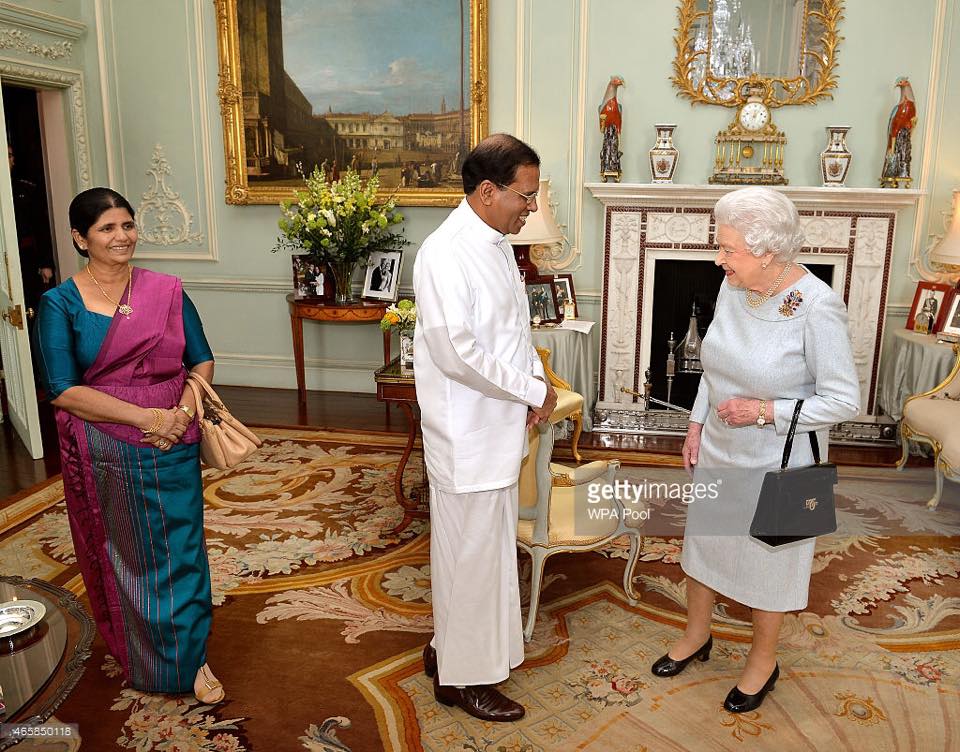

 Quickly after Maitri’s victory all opposition rallied round with promises of assistance for
 Secondly, it is required to comprehend the nature of the MR I regime and its technologies and modalities of governance. Let me concentrate only on crucial characteristics. Mahinda Rajapaksa preferred unipolar governance in a seemingly bipolar or multipolar political context. He did not want to crush the opposition, he in fact stated that he stood for a robust opposition. Nonetheless, he utilised both the carrot and stick in order to weaken the opposition by inviting opposition members to the cabinet. He had occasional coffee with the leader of the opposition. The presence of formal bipolarity was not an concern for him. This technologies of governance worked fairly well with neo-liberal financial policies place into practice in a nation in which democratic elections are a function with of great significance.
 If not for its timely finish in January it would have installed a far deeper malady within the Sri Lankan spirit than had hitherto been seasoned. No significant social issue – wealth inequality, underworld violence, racial and religious disharmony- could be resolved whilst the state remained an entity that continues year in year out, spending much more cash on military “defence” and grandiose projects than on applications of social upliftment – a most specific recipe for a spiritual death of the nation. It ought to be incandescently apparent that no one particular who has any concern for the integrity and life of Sri Lanka could have ignored that status quo.